Our native country…
The Vier- and Marschlande is a landscape covering around 130 km² in the south-east of Hamburg, between the Geest and Stromelbe. The natural boundaries of this landscape are formed by the main elbe in the south and the Geest in the north. It is bisected by the Gose and Dove Elbe rivers. Until the 12th century, this area offered people only limited living space, as it was a swamp consisting of several islands. The marshland only became a safe and permanently habitable area when they were diked and reclaimed in the Middle Ages. The Vier- and Marschlande only acquired its current appearance as a result of these measures and the river engineering changes since the 14th and 15th centuries.


The Vierlande…
Vierlande is a cultural landscape of around 77 square kilometers in the Hamburg district of Bergedorf, consisting of the four districts of Altengamme, Curslack, Kirchwerder and Neuengamme.
Vierlande was first mentioned in the Bergedorf treasure register around 1548, with the name referring to four parishes or originally four river islands in the Elbe’s glacial valley, which are largely identical to today’s districts.
Marschlande is a landscape in the Hamburg district of Bergedorf. The districts Allermöhe, Billwerder, Moorfleet, Neuallermöhe, Ochsenwerder, Reitbrook, Spadenland and Tatenberg are part of the Marschlande. Historically, however, other areas were also counted as part of Hamburg’s Marschlanden.
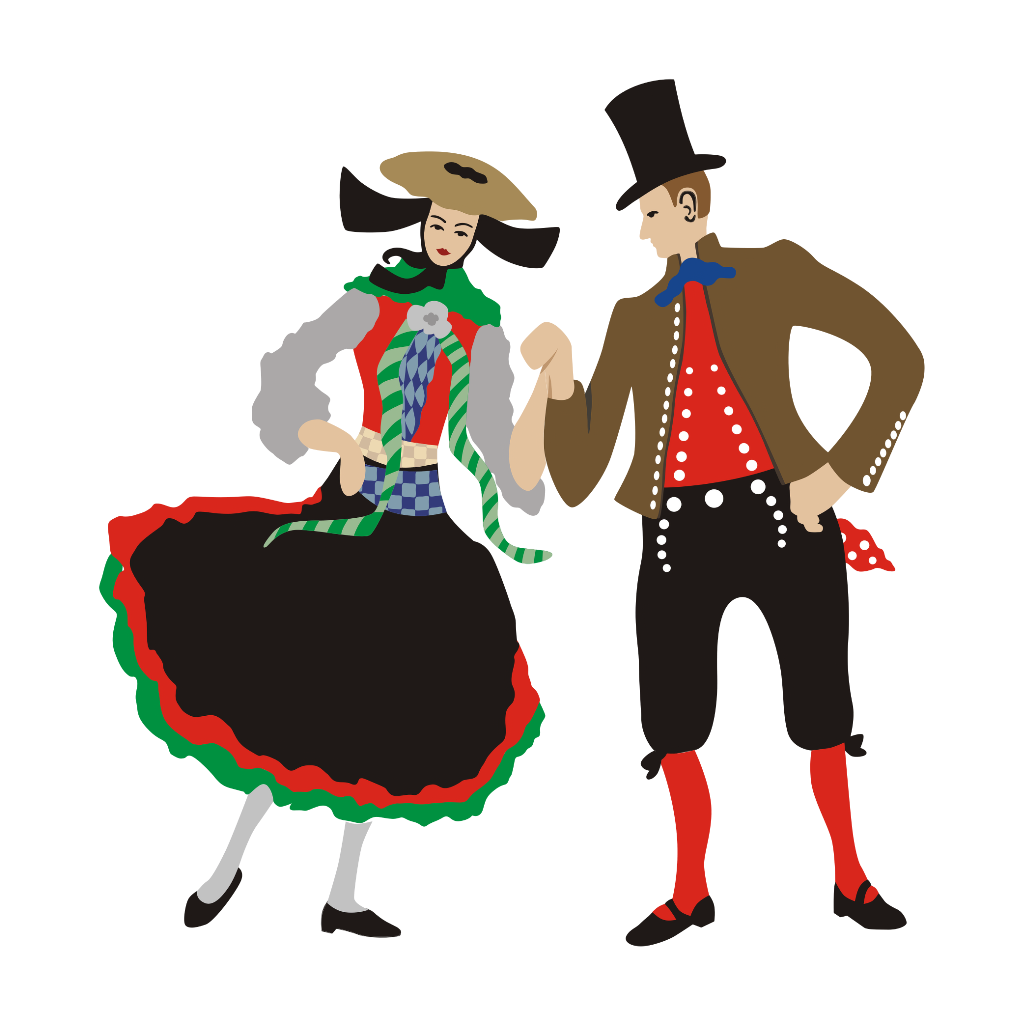
Discover traditional clothing…
More and more people in the Vierlande are rediscovering the value of beautiful traditional clothing and those who don’t have their own from old family collections are making new ones from old patterns…
History of the Vier- and Marschlande…
In the Vier- and Marschlanden, hops and barley were the most important crops, which found a strong market in the brewery city of Hamburg from the 14th to the 17th century.
From the 15th century onwards, Hamburg was considered the most important grain trading center, thus guaranteeing the purchase of agricultural yields. The marsh farmers were obliged to bring their grain to the Hamburg market alone, and the Vierländer were only allowed to sell their grain in Hamburg or Lübeck. Livestock farming, on the other hand, was of little importance. Horses were only kept by the farmers as draught cattle for tilling the fields.
In the second half of the 18th century, the transformation from Hamburg’s “granary” to a “vegetable chamber” began. Cabbage, root vegetables, beans, potatoes and fruit, especially cherries from Kirchwerder, now became the main crops. The Vierlande became famous for the cultivation of strawberries, which were first grown in 1693.
The main economic activities in the Vierlanden today are intensive flower and ornamental plant cultivation (Curslack and Neuengamme), berry and vegetable cultivation (Altengamme and Kirchwerder) and vegetable cultivation in the Marschlanden.
Typical of the Vierlande are the beautiful, thatched old farmhouses with their richly decorated half-timbered gables. Here, people and animals live under one roof. The living quarters are at the front and the stables and large hallway are at the back. Inside, there are still a few blue and white tiled walls and stoves, as well as inlaid furniture and paneling. Many of these half-timbered houses are now listed buildings.
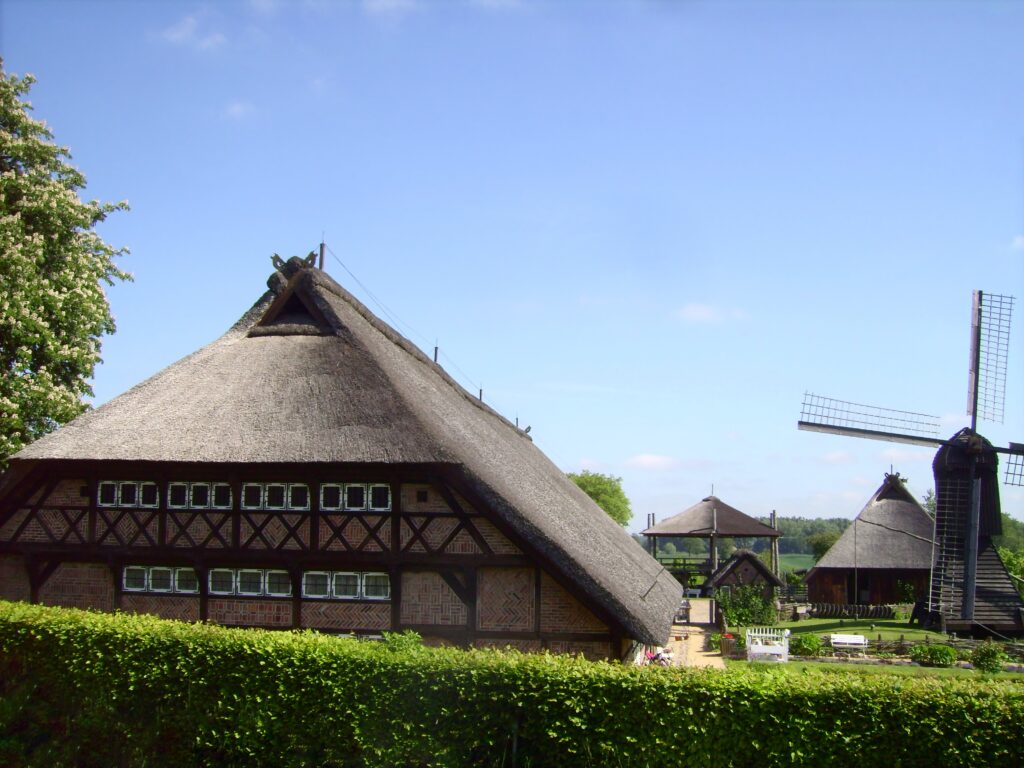
500 years of history in one building…
The Rieck Haus open-air museum in Curslack is one of the oldest preserved farmhouses in northern Germany. A bilingual permanent exhibition shows the cultural history of the Vier- and Marschlande in High and Low German. Part of the outdoor facilities are a scoop mill, granary, show garden, bakehouse, pigsty and a small playground for relaxing.
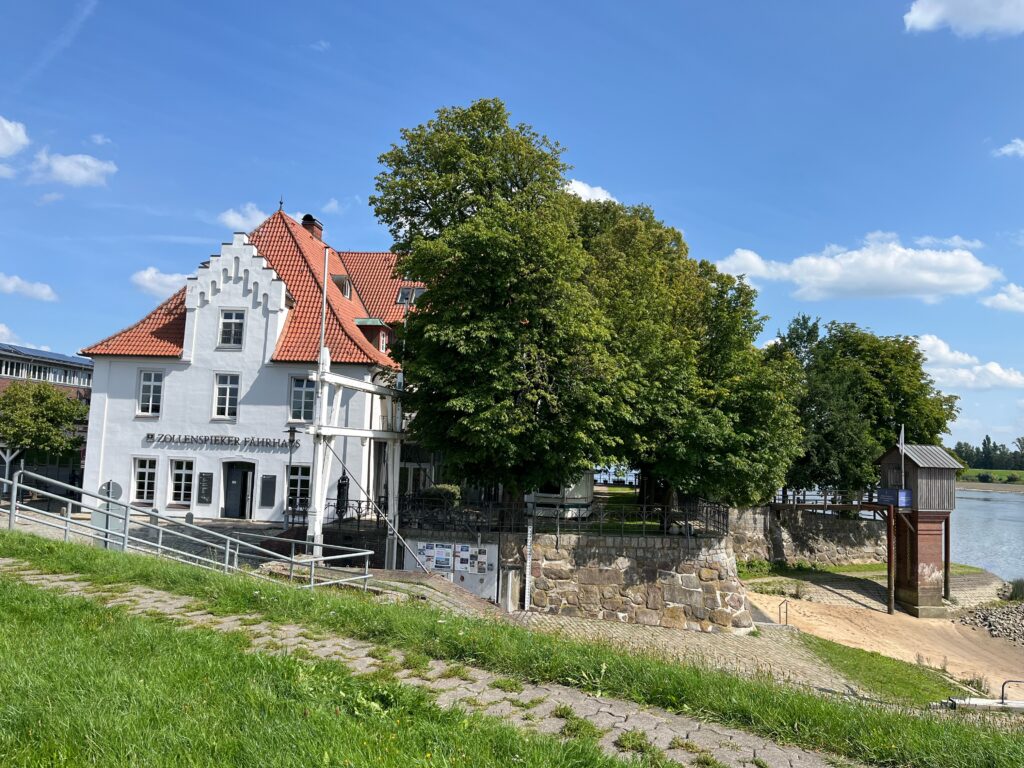
The ferry house Zollenspieker…
The Zollenspieker ferry house is a culturally and historically significant architectural monument. It is a landmark of the region, located at the southern part of the Hanseatic city of Hamburg. Since May 2012, the exclusive four-star hotel and the listed ferry house have combined modern hotel comfort with more than 759 years of history.
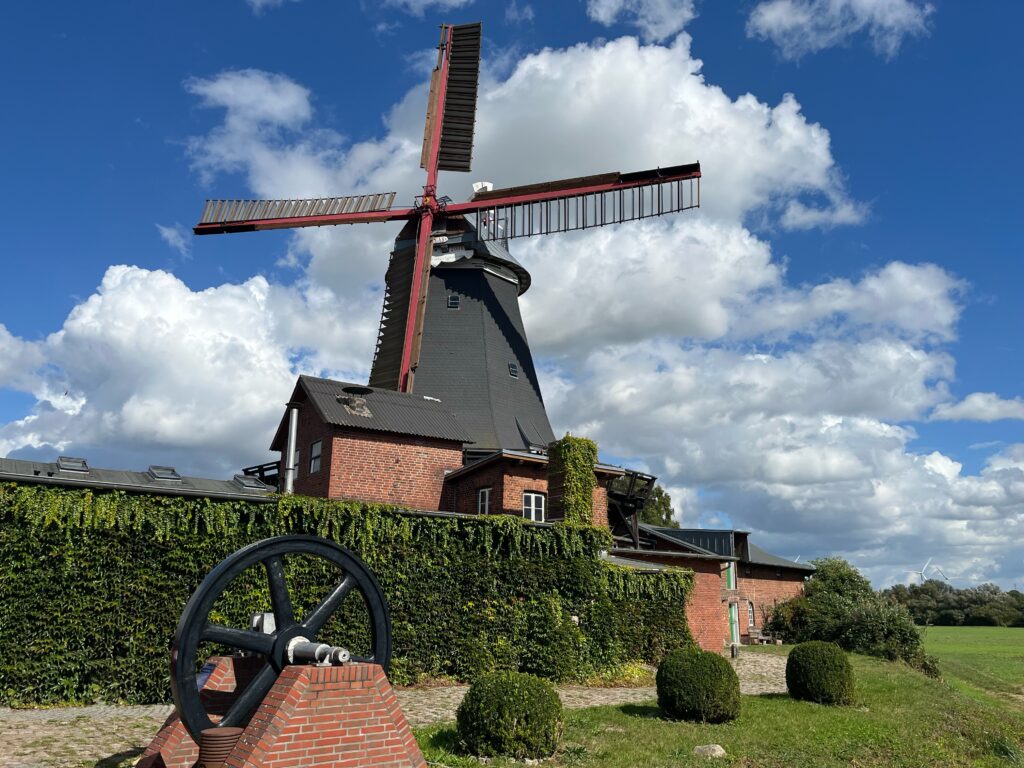
The Riepenburg mill…
The Riepenburg mill is located in Kirchwerder and is a so-called dutch windmill. Built in 1828, it is the oldest and largest preserved grain windmill in Hamburg. It was first mentioned in 1318, making it one of the oldest in Germany.
St. Johannis in Curslack…
The church of St. Johannis in Curslack is located to the north of the Dove Elbe, surrounded by the village churchyard. It is a fieldstone building, some parts of fieldstones can still be seen today in the south and west walls of the church.
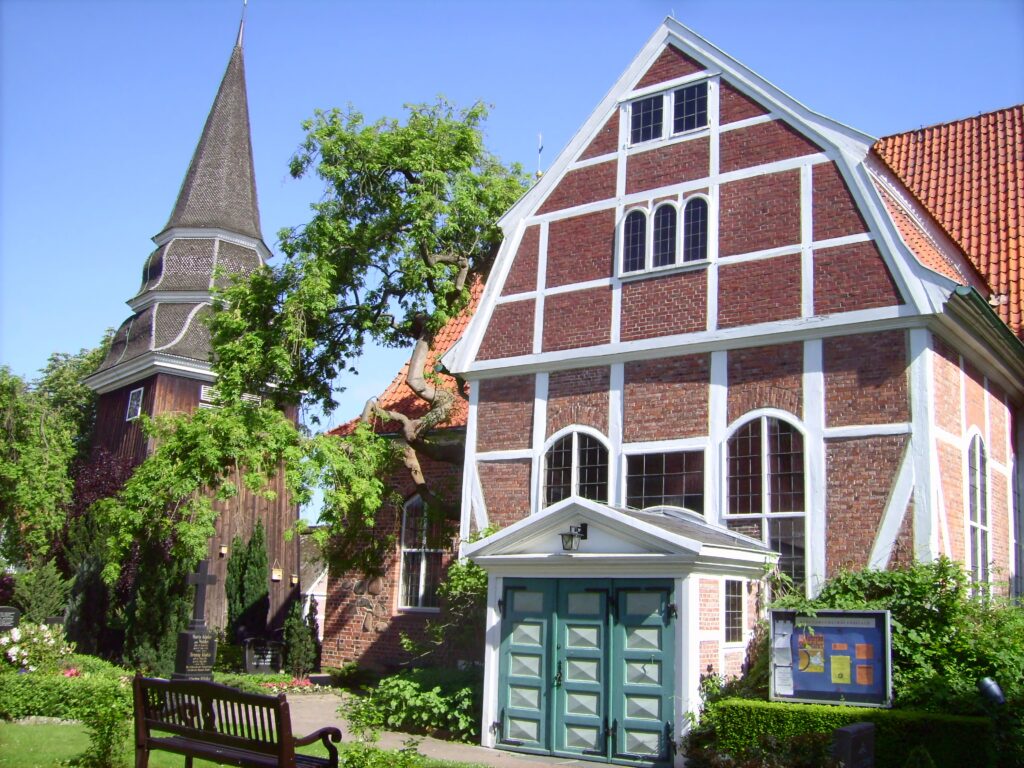
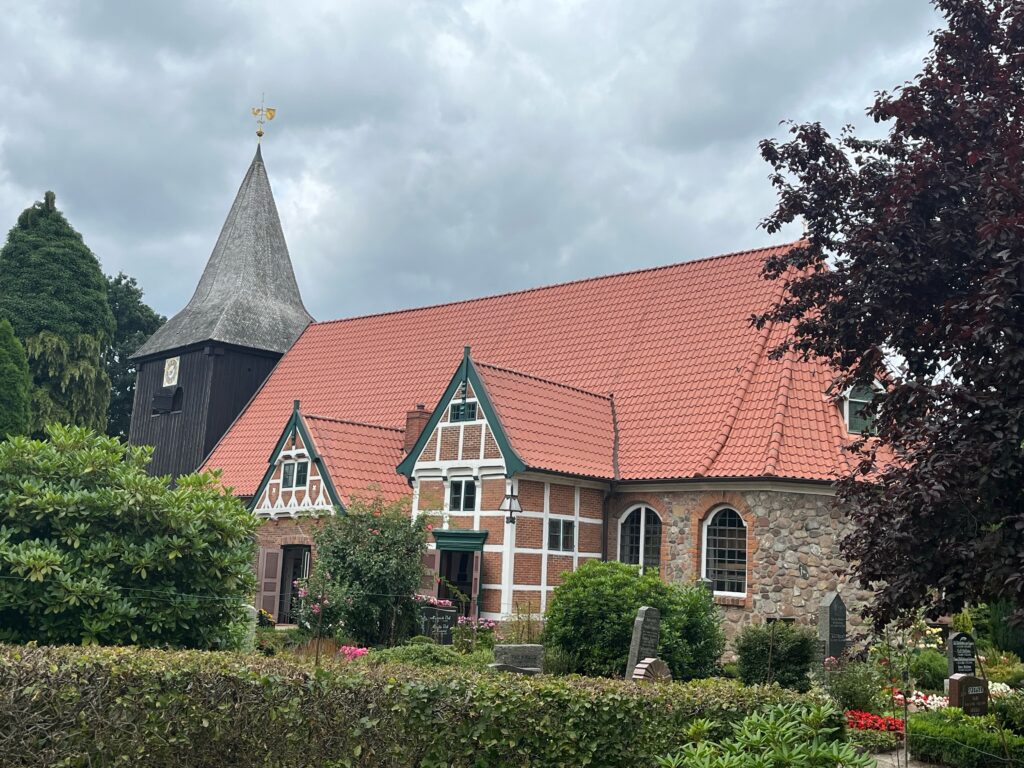
St. Nicolai in Altengamme…
The Altengamme church is one of the most beautiful churches in northern Germany. It was built in 1251 and is notable for its magnificent brass chandeliers and the many inlays and carvings.
St. Johannis in Neuengamme…
St. Johannis church in Neuengamme is located to the south of the Dove Elbe and is one of the oldest surviving church buildings in the Hamburg metropolitan area.
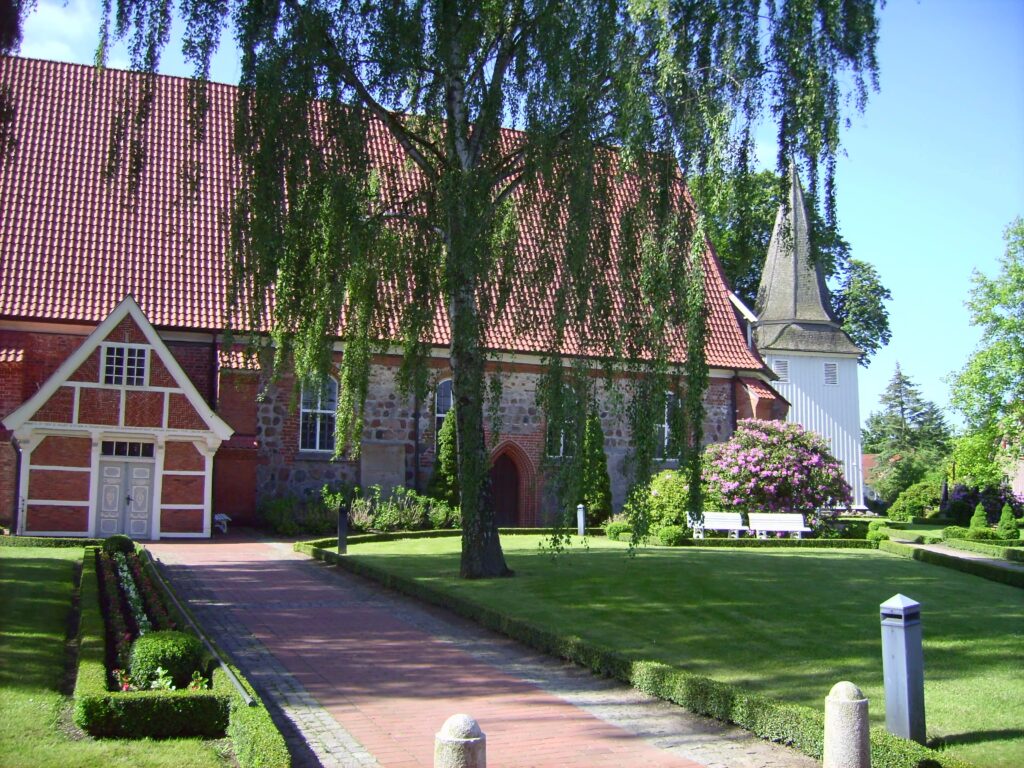
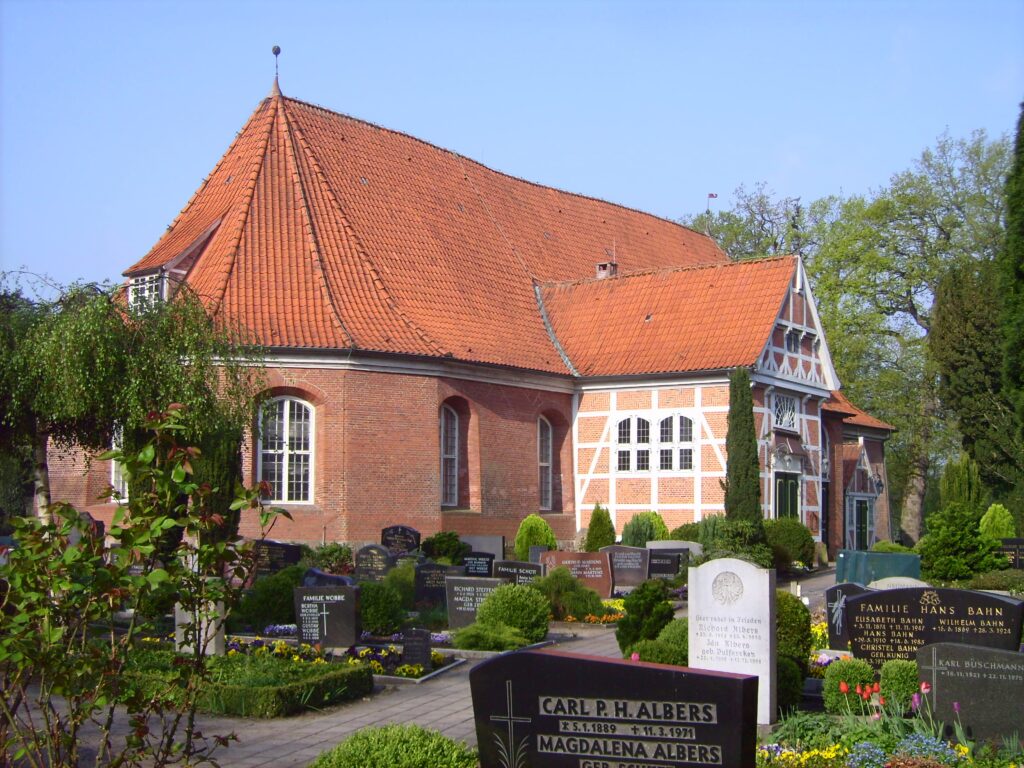
St. Severini in Kirchwerder…
St. Severini church is located in Kirchwerder and is the largest church in the Vierlande region. The core structure is a fieldstone building dating back to the 13th century.
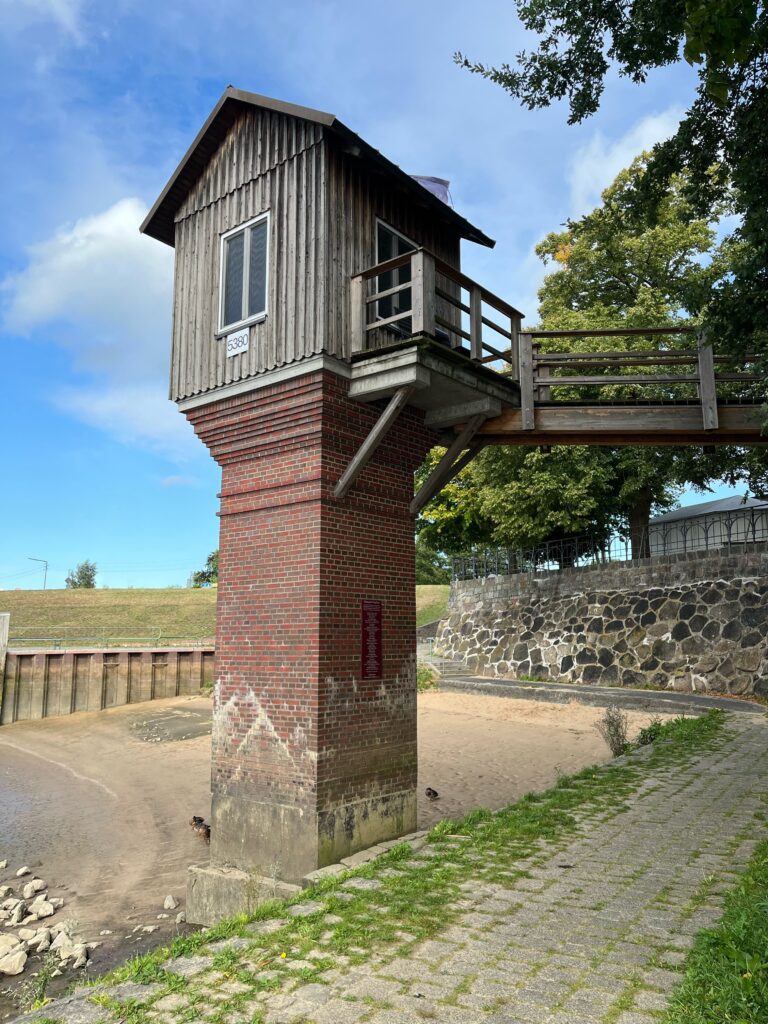
Old Zollenspieker Water Level Station…
Built around 1880 and demolished in 1992, the water level station was rebuilt true to the original thanks to donations. The house was used to measure the water level of the Elbe for shipping and the surrounding communities. Today, the world’s smallest restaurant offers a unique setting for a pleasant meal in private atmosphere.
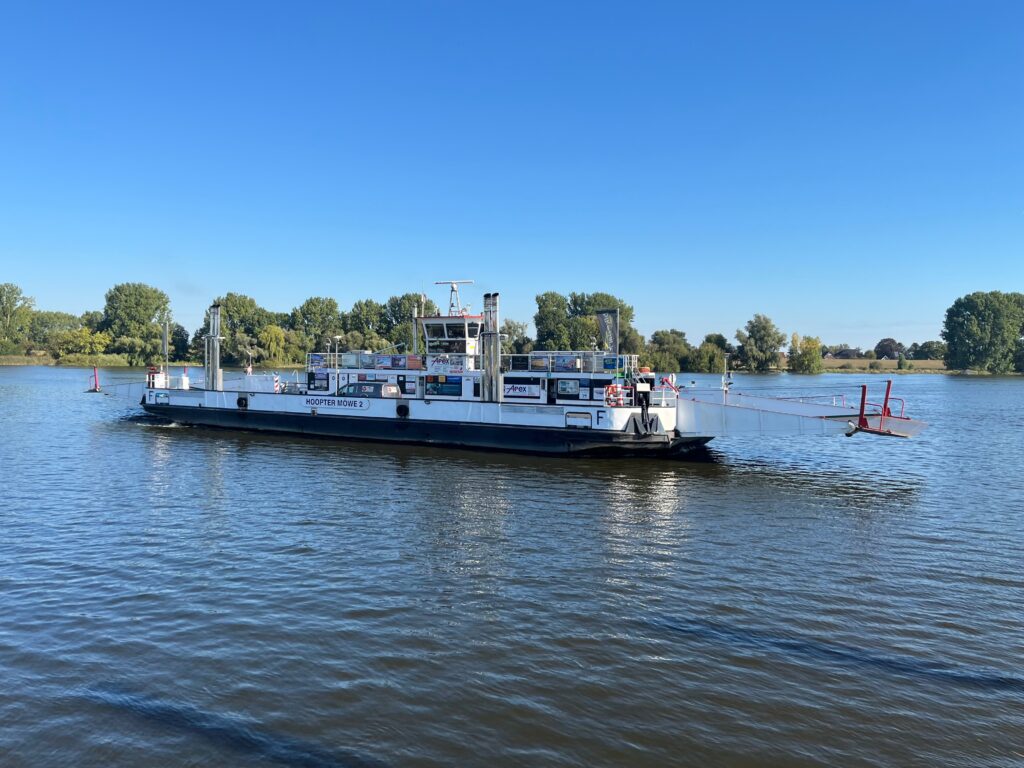
Zollenspieker Ferry…
The Zollenspieker Ferry, with its connection to the Lower Saxony side of the Elbe, has been one of the most important hubs for trade and military routes for centuries. The ferry connects Zollenspieker and Hoopte, the journey from one side to the other takes approximately 10 minutes.