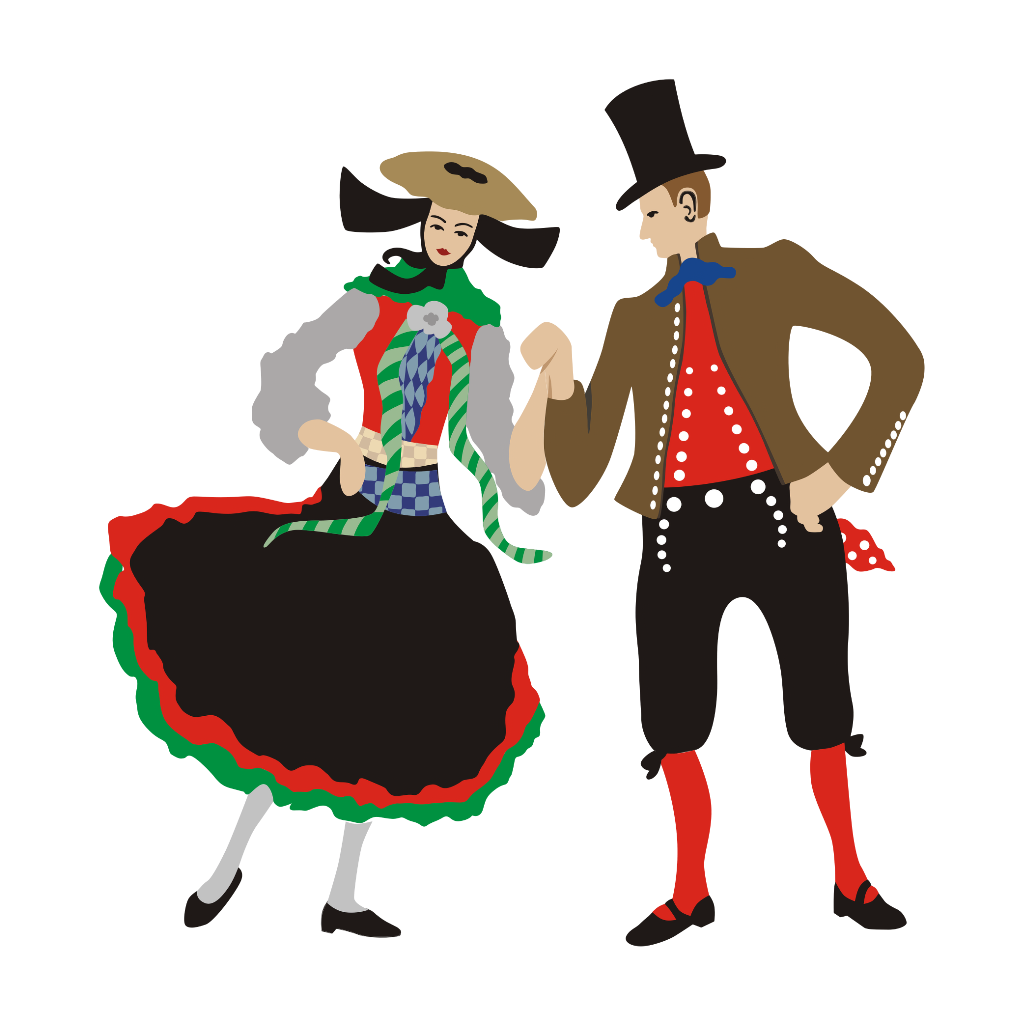
For those who do not know it, traditional clothes are peculiar and colorful clothes, but for the native people it is a talking book. It provides information about the exact place of location, family status, money status and reason why the traditional clothes are used. Almost every detail has a specific meaning.
Wer ick bünn, wat ick will un woher ick kumm,
Source: Vierländer song from “Über’n großen Teich” (A. Philipp)
mi de Frog to stellen is eegentlich to dumm.
Wer de Tracht hör wohl kennt, de süht dat mie an,
ick kumm ja direkt ut Verlann, Verlann!
Until 1920, the proud Vierländer still presented himself in his valuable traditional clothes. At markets, it was regarded as a guarantee of quality for products from the Vierlande region. Particularly remarkable are the many detailed embroideries, which were made with love by the women in the evening by the light of a kerosene lamp, and the many shiny silver buttons, up to 76 could be found on the male traditional clothes.
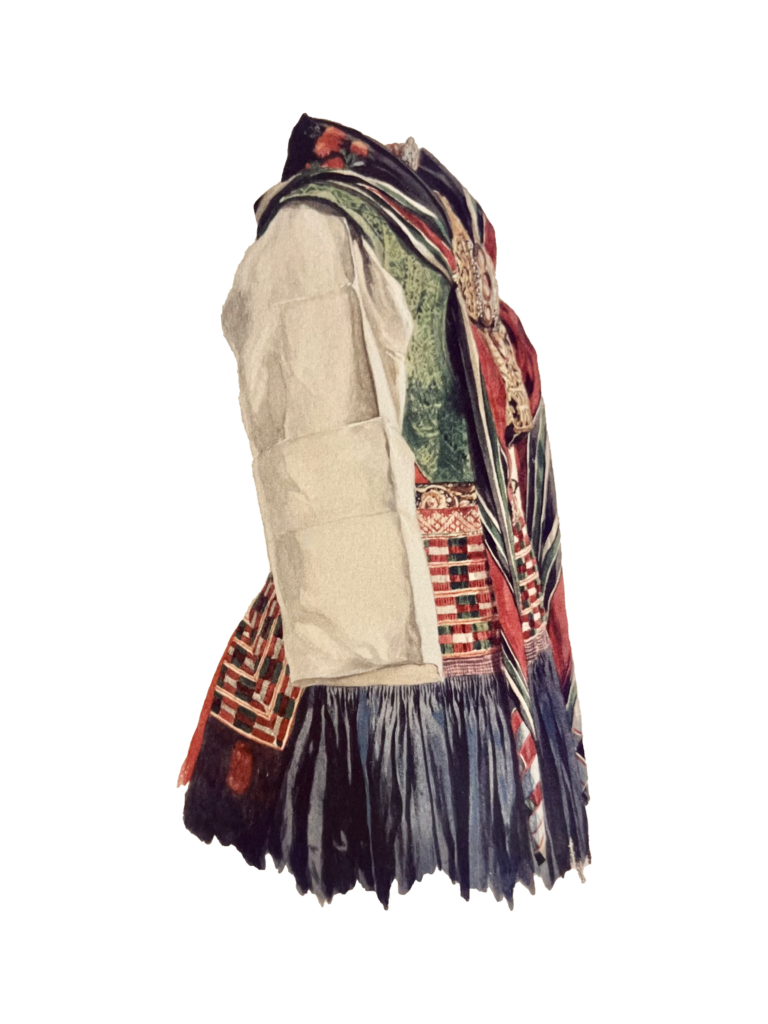
Female traditional clothing
The women’s traditional clothing consists of a swinging skirt (“Schört”) made of woolen cloth. So that it sticks out nicely, the woman often wears several skirts on top of each other, some also tie a padding around the hips. Over a white blouse with wide sleeves that are folded over once, a woman’s vest (“Liefstück” / “Rump”) is used, which is filled out at the front with a richly embroidered bib (“Boßdook”). A scarf, also embroidered, is placed around the shoulders, the rolled-up ends of which are held together over the chest by the silver or gold breast buckle (“Schillerkeed”) decorated with gemstones and miniature painting. The waist is adorned with an embroidered belt (“Gördl” / “Quäder”) around which the richly embroidered apron (“Platen”) is tied. The Vierländerin used to wear colored stockings, which are now only white, and black shoes. The woman’s headdress is very striking. A large, flat hat made of woven and sewn panicle grass is worn over a cap to which the black, stiff neck bow (“Krei”) is attached. The jacket (“Wams” / “Fudderhemd”) protects against the cold.
Discover our region…
Typical for the Vierlande are the beautiful, thatched old farmhouses with their richly decorated half-timbered gables.
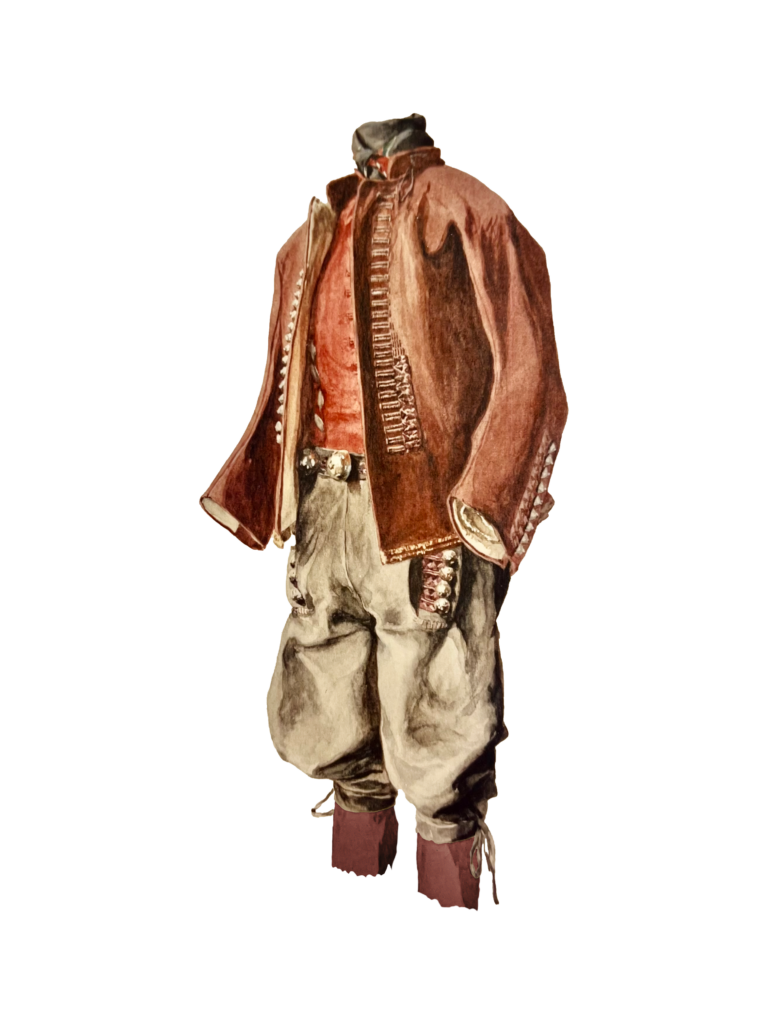
Male traditional clothing
The men’s dress includes a jacket to protect against the cold. Underneath, he also wears a white shirt and a vest, which is fastened at the front with a double row of flat silver buttons. The black flap trousers reach above the knee and also have silver buttons on the waistband and trouser pockets. Wine-red stockings and black shoes complete the men’s costume, as do a knotted neckerchief and a handkerchief pinned to the outside of the left trouser pocket. The head of the Vierländer is decorated with a black top hat.
After having been lost in large trunks for a long time, the traditional clothing is now back on the scene at many occasions such as weddings, birthdays and especially at our harvest festival.
More and more people in the Vierlanden are rediscovering the value of the beautiful traditional clothes for themselves and those who don’t have their own from old family collections are making a new one from old patterns…